Skip to content

QUALITY MAGAZINE APRIL 1991
Leasing NDT Instruments
BY JOHN J. KENDRICK
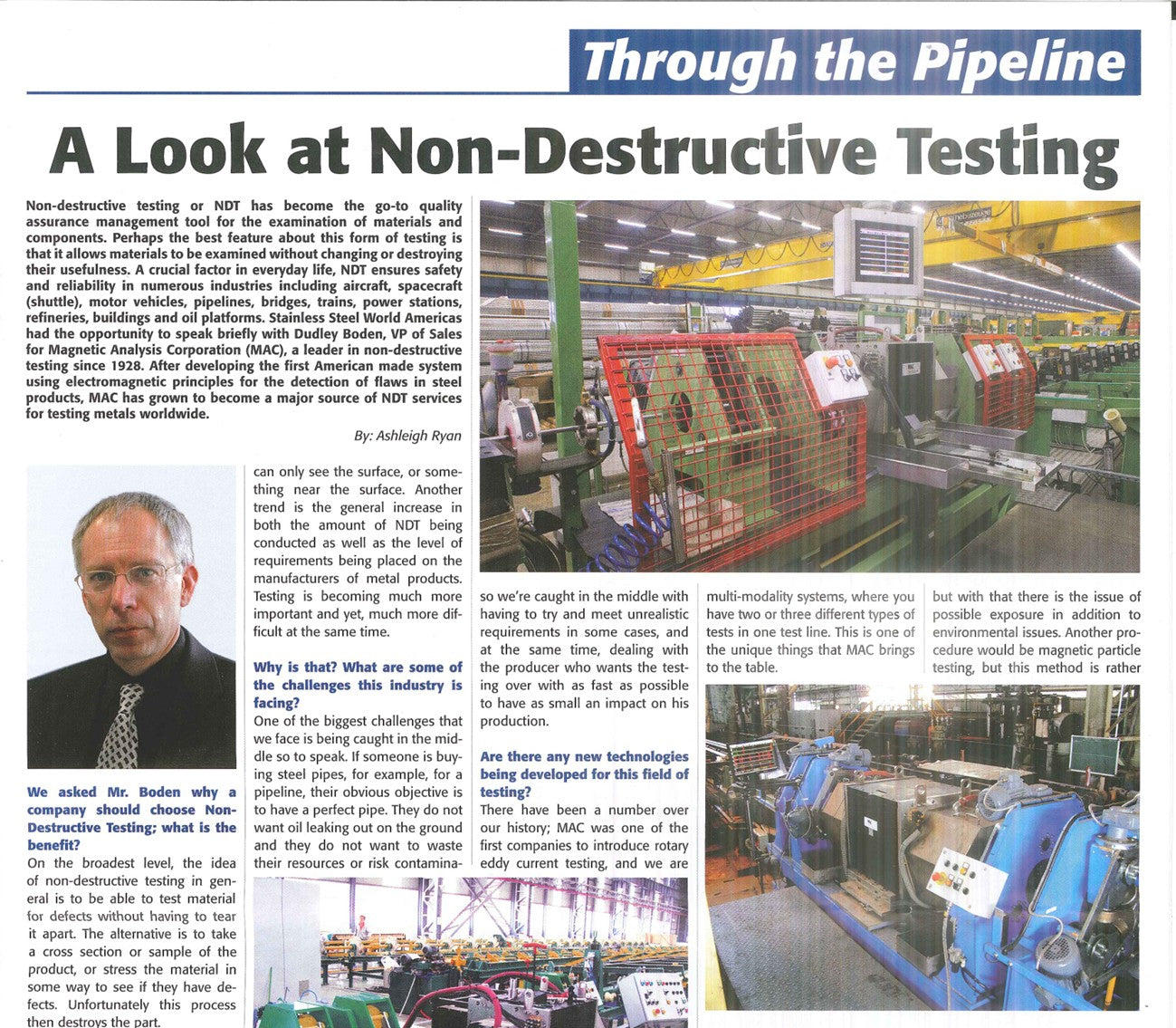
Magnetic Analysis Corp. (MAC), Mount Vernon, NY, has been a developer of nondestructive testing techniques and instruments for more than half a century.
Founded in 1928 to develop methods of testing carbon steel bars for defects using electromagnetic principles, MAC has grown to where it now tests magnetic and nonmagnetic metal products for a variety of defects and metallurgical and physical characteristics.
Instruments have been developed using electromagnetic, eddy current, flux leakage, and ultrasonic techniques for inspecting products ranging from 400 mm diameter tubing to 1 mm diameter ball bearings. Conditions ranging from seams, laps, cracks, and holes to inadequate heat treatment and alloy variations can be detected reliably and economically with these methods.

Most of MAC's customers lease their equipment, enabling them to easily upgrade the instruments as new developments are made available. The lease arrangement also provides servicing in the plant as needed and regular calibration checks for continuity of operation.
Magnetic analysis equipment leased by MAC includes a line of rotary probe instruments for the detection of surface defects in magnetic and nonmagnetic wire, rod, and bars. Using eddy current technology, these instruments use a rotating, focused null-type probe for detecting defects such as seams, laps, and cracks. Specialized applications include installations where the part under test is rotated past a stationary probe.
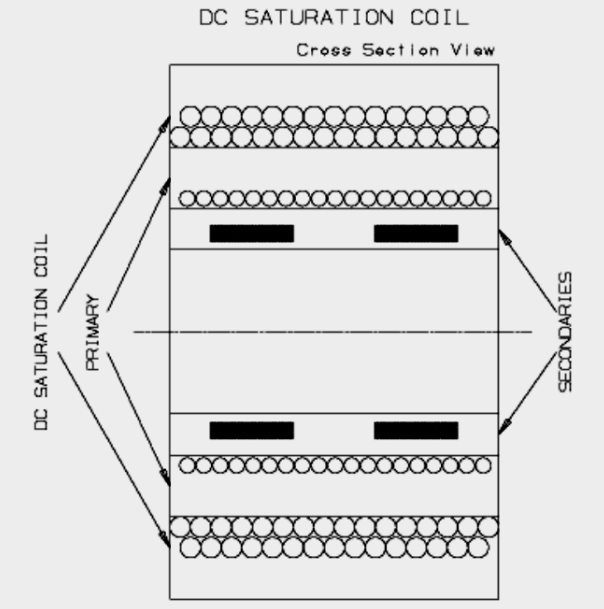
MAC's most sophisticated eddy current testers are encircling coil testers used to detect surface and subsurface flaws, including weld-line defects in materials with a uniform cross section. Encircling coil instruments operate at frequencies ranging from 1.6 kHz to 1 mHz for instruments specifically designed to inspect small-diameter wire. Typical applications for these instruments include magnetic and nonmagnetic bar, tubing, pipe, or wire. Other models provide the advantages of ultrasonic inspection at high throughput speeds for round bar and tubular products. MAC cites several advantages to leasing NDT equipment, including:
1. Selecting the best equipment for a particular application is easier.
- No obsolescence. The customer can easily upgrade to take advantage of latest advances as they occur and as needed.
- Trial leasing period is easily arranged. Selecting the most appropriate inspection equipment often requires a period of adjustment and trial. This becomes far easier with leased equipment.
- When production changes occur, equipment does not have to be scrapped. The customer can stop leasing one type of equipment and switch to leasing a different equipment that suits the new requirements. This is especially true when a production line is changed over to a different size, for example.
2. Maintaining quality control equipment in good operating order is easier.
- Service and replacement parts (except where failure is due to abuse) are provided as part of the lease. Both the lessor and lessee are eager to get the equipment repaired and up and running as soon as possible.
- Operator training and advice is available at installation and on a continuing basis, which is especially helpful when new people are assigned some time after the original installation.
3. Financing of quality control is easier.
- No large capital investment. No borrowing with accompanying interest charges is required. A company that is expanding rapidly or requires more exacting specifications can institute quality control steps without having to make a major financial commitment.
- Lease charges make up a direct current expense for tax purposes.

JOHN J. KENDRICK is senior editor of Quality.
Published in Quality Magazine in April 1991