Skip to content


Typical applications for encircling/sector ECT sensors are:
- Detect short surface and some subsurface defects, on or off-line, in magnetic and non-magnetic wire, bar and tube.
- Inspect welded tube for short ID or OD defects in the weld zone or on the full circumference.
- Test uniform cross sectional material, including squares, rectangles, hex and round.
- Inspect small diameter wire or tube for short defects.
- Check continuity and locate welds in single and multi-conductor insulated wire and cable
- When testing carbon steel, austentic stainless and alloy steels that have a permeability higher than 1, it is often necessary to saturate the material with a magnetic field. This has the effect of evening out the permeability variations in the material which would otherwise interfere with the ECT. Saturation coils are used to create the saturation field within which the ECT coil is paced.
Eddy Current Test Instruments:

Typical applications for rotary probe ECT sensors are:
- Detect seam type surface defects in cold drawn wire or cut length bar stock.
- Inspect in line with continuous wire operations such as wire drawing, parts forming, re-spooling, or straight and cut.
- Inspect cut lengths, usually off-line.
- Test parts, such as small shafts and bearings for longitudinal surface defects.
- Eddy Current technology can be used on ferrous and non-ferrous materials.
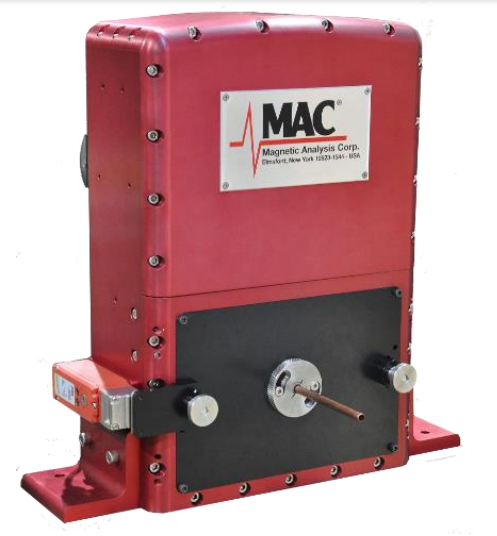
MAC Eddy Current Tester Received Strong Interest
The new high-speed Rotomac® eddy current tester for small diameter wire and rod from Magnetic Analysis Corp. (MAC) received strong interest from wire 2016 attendees.
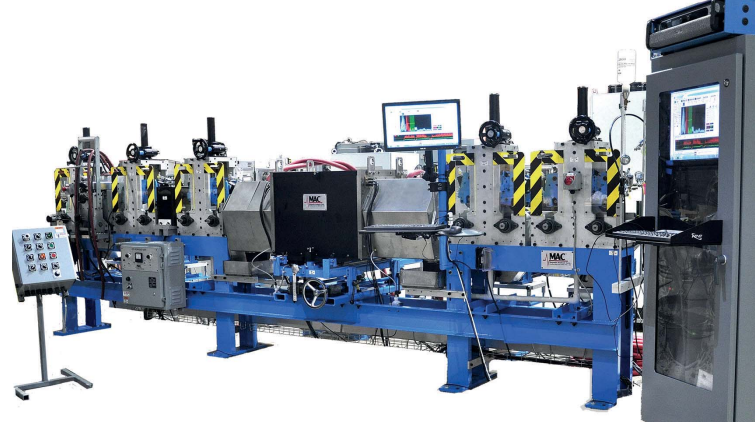
Ultrasonic/Eddy Current System for Automotive Shock Absorber Tubing
Magnetic Analysis Corp. (MAC) has supplied an ultrasonic/eddy current multi-test system to inspect cold-drawn welded tube used in the production of shock absorbers at a Monterrey, Mexico plant operated by Prosankin (formerly A-4C-Sankin).
Top Products Of 2016: Rotary Eddy Current Tester
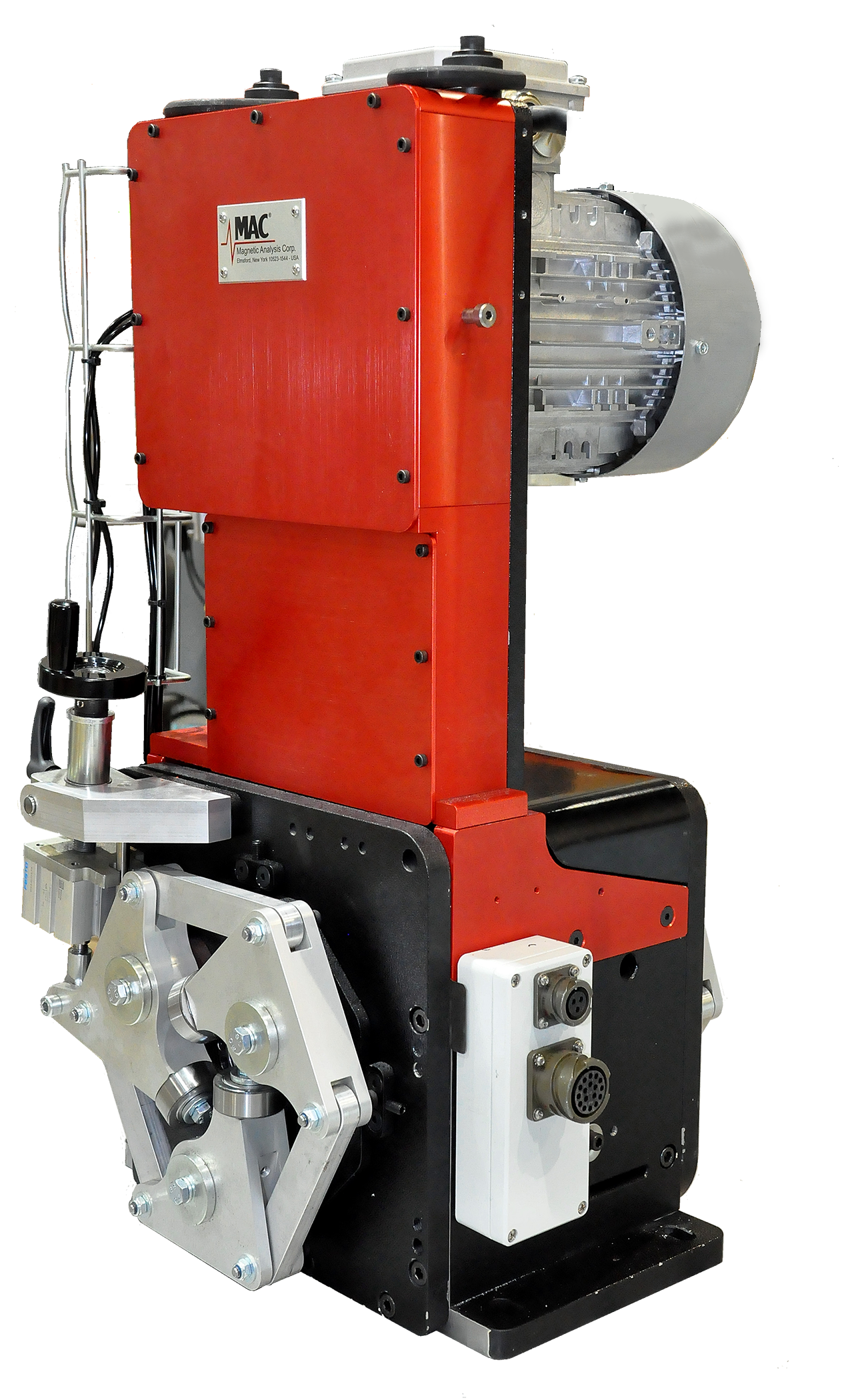
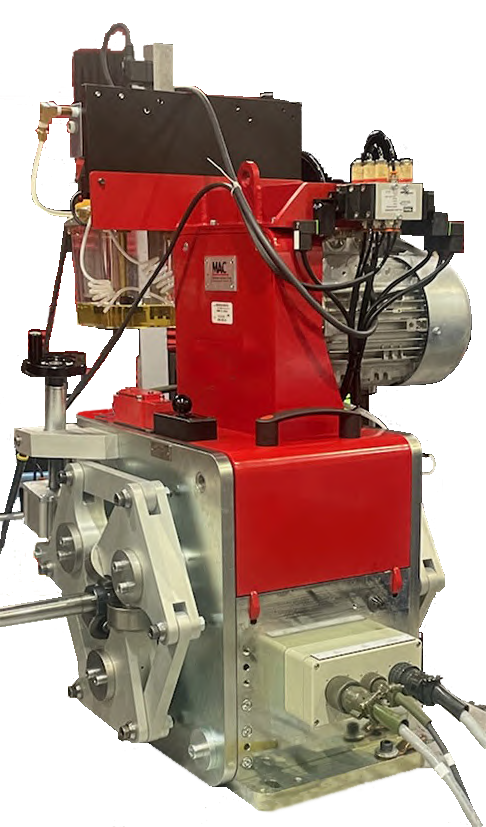
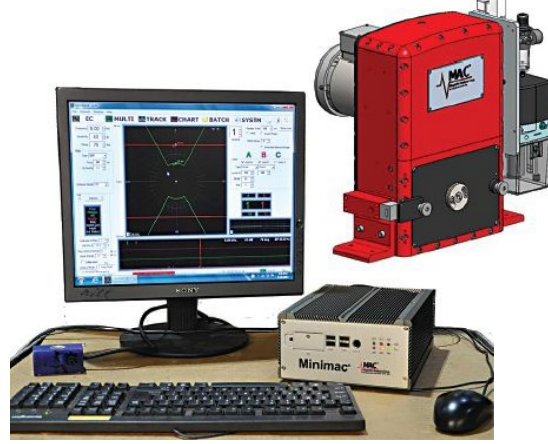
The high-speed Rotomac® rotary eddy current tester for small diameter wire and rod is available from Magnetic Analysis Corp., Elmsford, NY, USA. The Rotomac eddy current tester is designed for ease of use and superior performance in detecting longitudinal, seam-type defects in small diameter wire and bar from 2 to 20 mm diameter.

MAC Delivers Eddy Current Test System for High Performance Stainless Steel Pipe
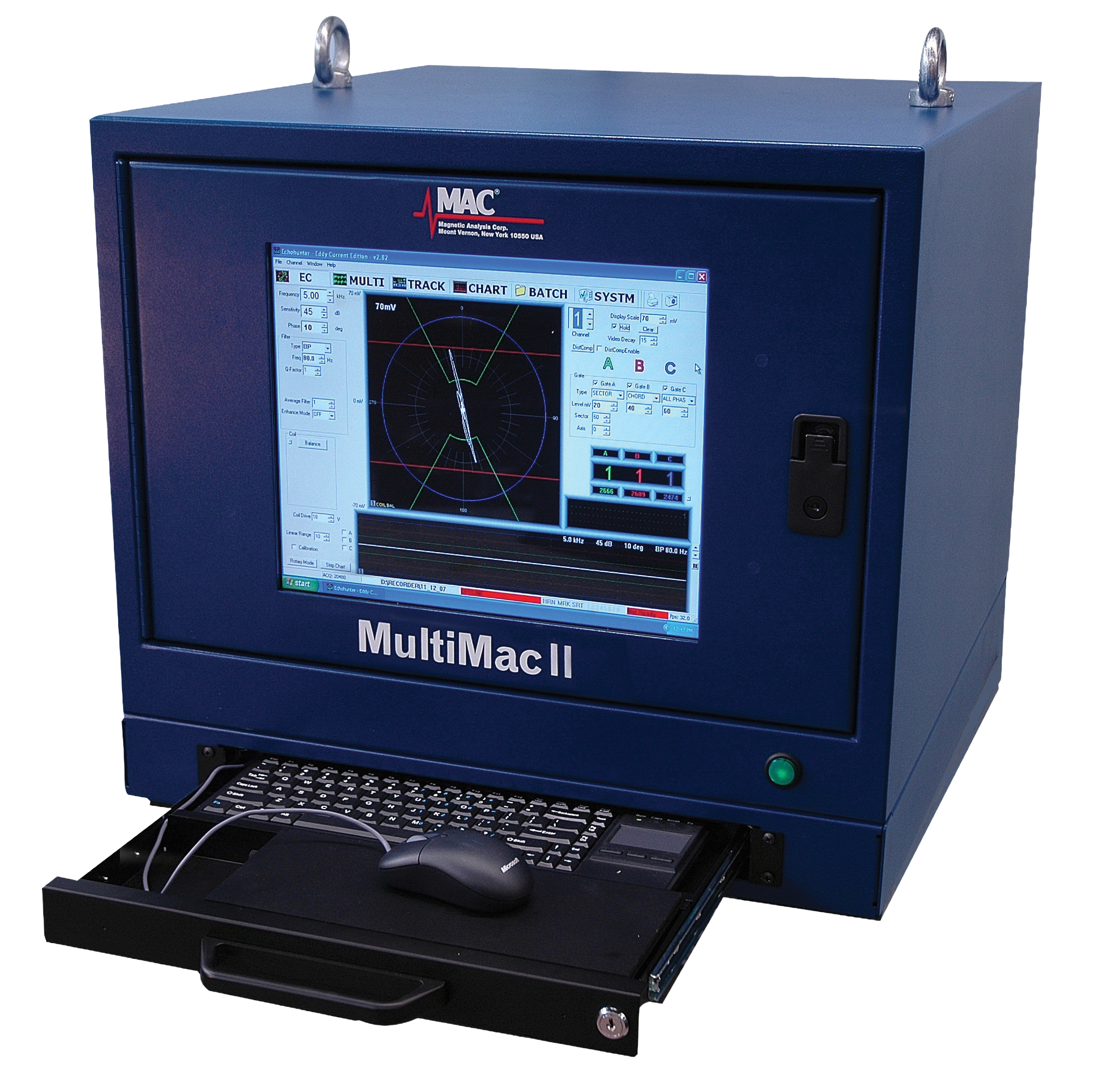
Magnetic Analysis Corp. has just delivered a single channel Multimac eddy current off-line test system designed to meet ASTM 999 (American Society for Testing Materials) specifications for testing welded stainless steel pipe.
Rotomac® 40mm Eddy Current Rotary to Test Rod
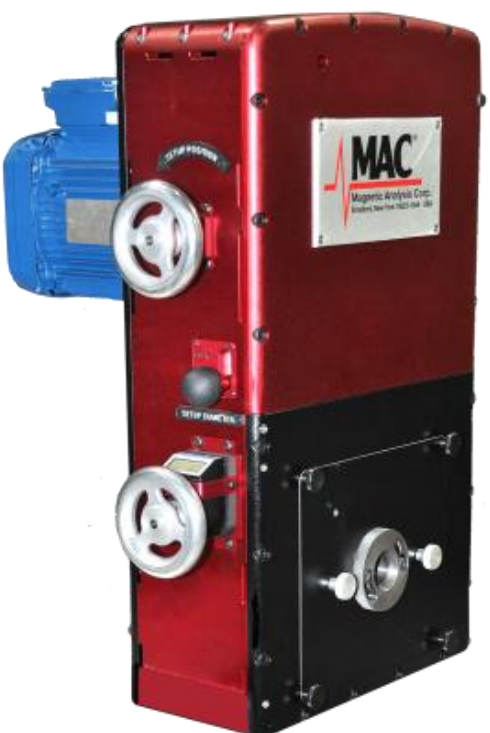
Magnetic Analysis Corp.’s new 40mm Rotomac® Eddy Current Rotary offers enhanced convenience for detecting seam-type surface defects in cold-drawn wire, cut-length bar stock, and parts forming. A single-handle external probe adjustment allows quick, safe dimensional changes without opening the rotary.
What Can Eddy Current Testing Do for Me Authored by Dean Isbell, ASNT Level III ET & UT
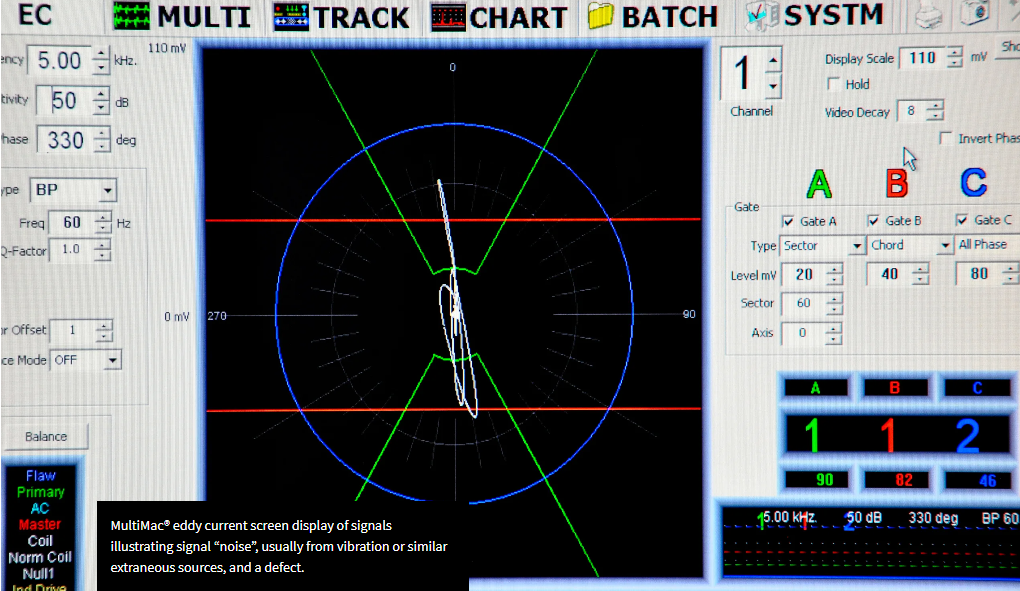
Since the development of eddy current testing in the early to mid-1900s this method has been used to detect defects and properties of many types of metals. The most common applications are testing tubular products for transverse defects, testing bar or wire products for longitudinal surface defects, and testing parts for defects and properties such as hardness.